

442 Type 13 (4 cylinder, 8 valve)
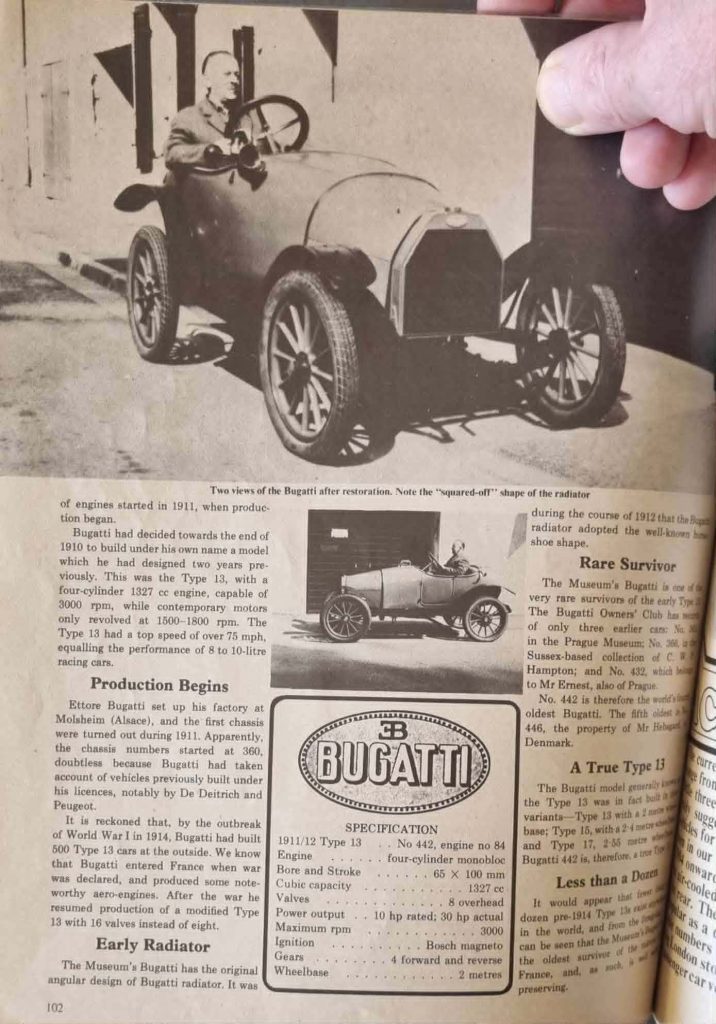
Introduced in 1910, Bugatti's first production car was retrospectively designated the Type 13, although contemporary literature reports five variants of this four-cylinder, eight-valve type that appeared before the Great War. The defining feature of the 1912 types was the wheelbase, two metres for the Type 13, 2.4 m for the Type 15 and 2.55 m for the Type 17. For these light and small models, especially at that time, Bugatti favoured the best materials, which, combined with his exceptional design talent, gave these cars performance that was unrelated to their small size. The press was enthusiastic, especially W. F. Bradley in The Motor of November 1910 where he wrote: "As a runabout, the Bugatti looks ideal, on the road it is as fast as any large car and in traffic it is faster thanks to its handling. The manufacturer guarantees that the little Bugatti can last 100 km/h and this assertion seems to be completely justified." The "8-valve" cars were immediately entered in various events, the results of which were proudly announced in the catalogues. Production of these Bugattis began at chassis No. 361 and continued from 1910 until the declaration of war in 1914, by which time more than 340 cars had been built. It resumed after 1919 for a year, bringing total production to 475 units. Fewer than 25 survivors of this model remain, the oldest being chassis 365 on display at the Museum of Science and Technology in Prague. The next chassis (366) is in the National Motor Museum in Beaulieu, UK, having been negotiated by Brooks/Bonhams specialists in settlement of the inheritance tax of the late Peter Hampton, its owner, in 1991. The surviving No. 432 car is therefore the fourth oldest surviving production car that would have been the 82nd built. With the help of authorized brand specialists David Sewell and Norbert Steinhauser – author of the recent book Ettore Bugatti, the Molsheim craftsman – the result of the research carried out on the beginnings of the Bugatti company allows Bonhams to confirm that this car was delivered new on March 13, 1912 to Messrs. Batalin and Plotnikoff of St Petersburg. It is still unclear whether the very special bodywork that the car has kept to this day was made in France before its delivery or whether it was bodied when it arrived in Russia. This fact is cross-checked by A. Dupouy's book "L'Automobile en Russie jusqu'en 1917" in which the author cites a few cars that we know arrived in Russia at that time, "442" being part of it and illustrated as such. Another car is the 1917 Delaunay-Belleville that Tsar Nicholas II had ordered as a car for hunting. Who owned this Bugatti afterwards or how the car escaped the uncertainties of conflicts and time, no one can say, but in October 1964, Mr. Girod-Emery, owner of the "Museon di Rodo" in Uzès, who had gone to Moscow, learned of the existence of a very old Bugatti which was located 150 km south of the city, in Tula: it was "442". Fortunately, the owner was eager to sell, but wanted this car to be sold to a museum in such a way that it would be appreciated at the its fair value. Since there was no such organization in the USSR interested in French cars, Mr. Girod-Emery was able to convince the owner that bringing the car back to France to be shown in his museum would be an ideal place to exhibit it. Difficult negotiations followed, but a little less than a year later, the car began its journey back to France. Transported by rail to Odessa on 26 September 1965 and then by boat to Genoa and Marseille on 20 October, the little Bugatti arrived in Uzès. At the time, a summary restoration was carried out and the repainted and reupholstered car was ready to enter the museum of Mr. Girod-Emery which was opened on April 3, 1966. It remained there until his death in 1990, when it became the property of two collectors reputed to be fervent Bugattists, Hervé Charbonneaux and Jean-François du Montant. The previous owner bought it at the Bugatti meeting in Montlhéry in 1993. It passed into the hands of the current owner at an auction in Paris in December 2000. As soon as this was purchased, the owner, himself a Bugatti enthusiast, sought the help of David Sewell and his suggestions on how to proceed with the restoration of this car. It was soon realized that the restoration of the 1960s had been very limited and that mechanically and structurally, the car was very tired. The owner commissioned Paul Myatt and later Zakira's Garage in Cincinnati to carry out a thorough restoration: the car was completely dismantled and rebuilt. The invoices for this work as well as a large number of detail photos are on file. The result is astonishing and worthy of this jewel from Bugatti. Mechanically, everything has been redone and the engine starts on one or two turns of the crank. A short test drive showed how lively and fast this car, despite its age, is. Back in France for the sale, it represents the archetype of this modest model from which generations of Bugattis will be born. Between its rarity, its mysterious links to Russia and its magnificent presentation, this is an eminently desirable automobile dating from the incubation period of the "thoroughbred" spirit. Offered with its registration document in New York, it will be subject to the applicable import taxes. Introduced in 1910, Bugatti's first production car is retrospectively referred to as the Type 13, though contemporary literature confirms five variants of 8 valve four cylinder cars in the pre-war period. The distinguishing feature for 1912 cars was the wheel base length, the Type 13 being 2 metres, while two other models a 2.4 metre Type 15 and 2.55 meter Type 17 were also listed. Of relatively lightweight proportions, even in these early days Bugatti favoured the use of the finest materials and combined with his exceptional design skills enabled these cars to provide performance out of character with their size. The cars received very favourable press response, not least by W.F. Bradley in The Motor in November 1910, where he comments 'as a runabout the Bugatti seems ideal, for on open roads, it is as fast as any of the larger mounts, and in traffic it is quicker because of its handiness.' 'The makers guarantee that the little Bugatti can maintain 60 miles an hour, the claim seems to be well-founded.' The 8 valve cars were immediately campaigned in various events, the results of which were proclaimed proudly in sales catalogues, earliest successes being first places in the meeting at La Sarthe on June 4/5th 1911. Production of these Bugattis ran consecutively from chassis number 361 and from 1910 to the outbreak of war in 1914, by which time over 340 cars had been built. It continued after the war for a year from 1919, bringing total unit numbers to 475. There are fewer than 25 surviving examples of the model, the oldest of all is chassis 365 which resides in the Science and Technical Museum in Prague. The next production car '366' may now be seen at the National Motor Museum, Beaulieu, U.K. having been negotiated by Brooks/Bonhams specialists in lieu of inheritance tax on the death of its owner Peter Hampton in 1991. Car 432 also survives making this the 4th oldest production car to survive, though it would have been the 82nd car built. With assistance from noted marque authorities David Sewell and Norbert Steinhauser – author of the recently published book Ettore Bugatti, L'artisan de Molsheim - the result of tireless research on the earliest days of the Bugatti company, Bonhams are able to confirm that this car was delivered new on 13th March 1912, to Messrs. Batalin and Plotnikoff of St. Petersberg. It is also not known whether the distinctive bodywork that the car retains to this very day was put on the car in France before it was sold, or whether it was bodied on its arrival in the U.S.S.R. This is further endorsed by A. Dupouy's book L'Automobile en Russie jusqu'en 1917 where the author cites a handful of cars that were known to have arrived in Russia in the Edwardian period, 442 being one of those and it is illustrated as such. Another is the 1917 Delaunay-Belleville which Tsar Nicholas II ordered for use as a hunting car. Who owned the Bugatti next or how the car came to weather the vagaries of conflicts and time has not been documented, but in October 1964, M. Girod-Emery, the owner of the 'Museon de Rodo' at Uzès in Provence while traveling in Moscow, learned of an early Bugatti which rested 150km south of the capital, in Tula, and that was 442. Fortunately, the owner was willing to sell, but wished for his prized possession to be sold to a Museum so that it could be appreciated properly. Since there was no such local institution with an interest in French cars, M. Girod-Emery was able to convince the owner that by returning it to France and being exhibited in his Museum, this would be a perfect location for the car. Protracted negotiations ensued, but just under a year later the car began its journey back to France. Transported by rail to Odessa on 26 September 1965 and subsequently shipped via Genoa to Marseilles by the 20th October, the little Bugatti arrived in Uzès. At this time a basic restoration was commissioned, the car seemingly being efficiently repainted and retrimmed ready for exhibition at Mr. Girod-Emery's Museum when it opened on 3rd April 1966. There it remained until M. Girod-Emery's death in 1990, at which time it passed to the joint ownership of two noted car enthusiasts and Bugattistes Hervé Charbonneau and Jean-François du Montant. It was during the annual Bugatti weekend at the historic Montlhèry race circuit in 1993 that the former owner purchased it. It passed to the present owner at public auction in Paris in December 2000. On acquisition, the owner another die-hard Bugatti enthusiast enlisted the help of David Sewell to make suggestions as to how to proceed with a restoration of the car. It was quickly apparent that the mid 1960s restoration had been modest in its extent and that mechanically and structurally the car was extremely tired. The owner commissioned Paul Myatt and later Zakira's Garage of Cincinnati to undertake an extensive and extremely thorough restoration, the car being entirely disassembled and rebuilt from the ground up. Bills for this work as well as copious photographs documenting this work are on file. Introduced in 1910, Bugatti's first production car was retrospectively designated the Type 13, although contemporary literature reports five variants of this four-cylinder, eight-valve type that appeared before the Great War. The defining feature of the 1912 types was the wheelbase, two metres for the Type 13, 2.4 m for the Type 15 and 2.55 m for the Type 17. For these light and small models, especially at that time, Bugatti favoured the best materials, which, combined with his exceptional design talent, gave these cars performance that was unrelated to their small size. The press was enthusiastic, especially W. F. Bradley in The Motor of November 1910 where he wrote: "As a runabout, the Bugatti looks ideal, on the road it is as fast as any large car and in traffic it is faster thanks to its handling. The manufacturer guarantees that the little Bugatti can last 100 km/h and this assertion seems to be completely justified." The "8-valve" cars were immediately entered in various events, the results of which were proudly announced in the catalogues. Production of these Bugattis began at chassis No. 361 and continued from 1910 until the declaration of war in 1914, by which time more than 340 cars had been built. It resumed after 1919 for a year, bringing total production to 475 units. Fewer than 25 survivors of this model remain, the oldest being chassis 365 on display at the Museum of Science and Technology in Prague. The next chassis (366) is in the National Motor Museum in Beaulieu, UK, having been negotiated by Brooks/Bonhams specialists in settlement of the inheritance tax of the late Peter Hampton, its owner, in 1991. The surviving No. 432 car is therefore the fourth oldest surviving production car that would have been the 82nd built. With the help of authorized brand specialists David Sewell and Norbert Steinhauser – author of the recent book Ettore Bugatti, the Molsheim craftsman – the result of the research carried out on the beginnings of the Bugatti company allows Bonhams to confirm that this car was delivered new on March 13, 1912 to Messrs. Batalin and Plotnikoff of St Petersburg. It is still unclear whether the very special bodywork that the car has kept to this day was made in France before its delivery or whether it was bodied when it arrived in Russia. This fact is cross-checked by A. Dupouy's book "L'Automobile en Russie jusqu'en 1917" in which the author cites a few cars that we know arrived in Russia at that time, "442" being part of it and illustrated as such. Another car is the 1917 Delaunay-Belleville that Tsar Nicholas II had ordered as a car for hunting. Who owned this Bugatti afterwards or how the car escaped the uncertainties of conflicts and time, no one can say, but in October 1964, Mr. Girod-Emery, owner of the "Museon di Rodo" in Uzès, who had gone to Moscow, learned of the existence of a very old Bugatti which was located 150 km south of the city, in Tula: it was "442". Fortunately, the owner was eager to sell, but wanted this car to be sold to a museum in such a way that it would be appreciated at the its fair value. Since there was no such organization in the USSR interested in French cars, Mr. Girod-Emery was able to convince the owner that bringing the car back to France to be shown in his museum would be an ideal place to exhibit it. Difficult negotiations followed, but a little less than a year later, the car began its journey back to France. Transported by rail to Odessa on 26 September 1965 and then by boat to Genoa and Marseille on 20 October, the little Bugatti arrived in Uzès. At the time, a summary restoration was carried out and the repainted and reupholstered car was ready to enter the museum of Mr. Girod-Emery which was opened on April 3, 1966. It remained there until his death in 1990, when it became the property of two collectors reputed to be fervent Bugattists, Hervé Charbonneaux and Jean-François du Montant. The previous owner bought it at the Bugatti meeting in Montlhéry in 1993. It passed into the hands of the current owner at an auction in Paris in December 2000. As soon as this was purchased, the owner, himself a Bugatti enthusiast, sought the help of David Sewell and his suggestions on how to proceed with the restoration of this car. It was soon realized that the restoration of the 1960s had been very limited and that mechanically and structurally, the car was very tired. The owner commissioned Paul Myatt and later Zakira's Garage in Cincinnati to carry out a thorough restoration: the car was completely dismantled and rebuilt. The invoices for this work as well as a large number of detail photos are on file. The result is astonishing and worthy of this jewel from Bugatti. Mechanically, everything has been redone and the engine starts on one or two turns of the crank. A short test drive showed how lively and fast this car, despite its age, is. Back in France for the sale, it represents the archetype of this modest model from which generations of Bugattis will be born. Between its rarity, its mysterious links to Russia and its magnificent presentation, this is an eminently desirable automobile dating from the incubation period of the "thoroughbred" spirit. Offered with its registration document in New York, it will be subject to the applicable import taxes. Introduced in 1910, Bugatti's first production car is retrospectively referred to as the Type 13, though contemporary literature confirms five variants of 8 valve four cylinder cars in the pre-war period. The distinguishing feature for 1912 cars was the wheel base length, the Type 13 being 2 metres, while two other models a 2.4 metre Type 15 and 2.55 meter Type 17 were also listed. Of relatively lightweight proportions, even in these early days Bugatti favoured the use of the finest materials and combined with his exceptional design skills enabled these cars to provide performance out of character with their size. The cars received very favourable press response, not least by W.F. Bradley in The Motor in November 1910, where he comments 'as a runabout the Bugatti seems ideal, for on open roads, it is as fast as any of the larger mounts, and in traffic it is quicker because of its handiness.' 'The makers guarantee that the little Bugatti can maintain 60 miles an hour, the claim seems to be well-founded.' The 8 valve cars were immediately campaigned in various events, the results of which were proclaimed proudly in sales catalogues, earliest successes being first places in the meeting at La Sarthe on June 4/5th 1911. Production of these Bugattis ran consecutively from chassis number 361 and from 1910 to the outbreak of war in 1914, by which time over 340 cars had been built. It continued after the war for a year from 1919, bringing total unit numbers to 475. There are fewer than 25 surviving examples of the model, the oldest of all is chassis 365 which resides in the Science and Technical Museum in Prague. The next production car '366' may now be seen at the National Motor Museum, Beaulieu, U.K. having been negotiated by Brooks/Bonhams specialists in lieu of inheritance tax on the death of its owner Peter Hampton in 1991. Car 432 also survives making this the 4th oldest production car to survive, though it would have been the 82nd car built. With assistance from noted marque authorities David Sewell and Norbert Steinhauser – author of the recently published book Ettore Bugatti, L'artisan de Molsheim - the result of tireless research on the earliest days of the Bugatti company, Bonhams are able to confirm that this car was delivered new on 13th March 1912, to Messrs. Batalin and Plotnikoff of St. Petersberg. It is also not known whether the distinctive bodywork that the car retains to this very day was put on the car in France before it was sold, or whether it was bodied on its arrival in the U.S.S.R. This is further endorsed by A. Dupouy's book L'Automobile en Russie jusqu'en 1917 where the author cites a handful of cars that were known to have arrived in Russia in the Edwardian period, 442 being one of those and it is illustrated as such. Another is the 1917 Delaunay-Belleville which Tsar Nicholas II ordered for use as a hunting car. Who owned the Bugatti next or how the car came to weather the vagaries of conflicts and time has not been documented, but in October 1964, M. Girod-Emery, the owner of the 'Museon de Rodo' at Uzès in Provence while traveling in Moscow, learned of an early Bugatti which rested 150km south of the capital, in Tula, and that was 442. Fortunately, the owner was willing to sell, but wished for his prized possession to be sold to a Museum so that it could be appreciated properly. Since there was no such local institution with an interest in French cars, M. Girod-Emery was able to convince the owner that by returning it to France and being exhibited in his Museum, this would be a perfect location for the car. Protracted negotiations ensued, but just under a year later the car began its journey back to France. Transported by rail to Odessa on 26 September 1965 and subsequently shipped via Genoa to Marseilles by the 20th October, the little Bugatti arrived in Uzès. At this time a basic restoration was commissioned, the car seemingly being efficiently repainted and retrimmed ready for exhibition at Mr. Girod-Emery's Museum when it opened on 3rd April 1966. There it remained until M. Girod-Emery's death in 1990, at which time it passed to the joint ownership of two noted car enthusiasts and Bugattistes Hervé Charbonneau and Jean-François du Montant. It was during the annual Bugatti weekend at the historic Montlhèry race circuit in 1993 that the former owner purchased it. It passed to the present owner at public auction in Paris in December 2000. On acquisition, the owner another die-hard Bugatti enthusiast enlisted the help of David Sewell to make suggestions as to how to proceed with a restoration of the car. It was quickly apparent that the mid 1960s restoration had been modest in its extent and that mechanically and structurally the car was extremely tired. The owner commissioned Paul Myatt and later Zakira's Garage of Cincinnati to undertake an extensive and extremely thorough restoration, the car being entirely disassembled and rebuilt from the ground up. Bills for this work as well as copious photographs documenting this work are on file.
442
Introduced in 1910, Bugatti's first production car was retrospectively designated the Type 13, although contemporary literature reports five variants of this four-cylinder, eight-valve type that appeared before the Great War. The defining feature of the 1912 types was the wheelbase, two metres for the Type 13, 2.4 m for the Type 15 and 2.55 m for the Type 17.
For these light and small models, especially at that time, Bugatti favoured the best materials, which, combined with his exceptional design talent, gave these cars performance that was unrelated to their small size. The press was enthusiastic, especially W. F. Bradley in The Motor of November 1910 where he wrote: "As a runabout, the Bugatti looks ideal, on the road it is as fast as any large car and in traffic it is faster thanks to its handling. The manufacturer guarantees that the little Bugatti can last 100 km/h and this assertion seems to be completely justified."
The "8-valve" cars were immediately entered in various events, the results of which were proudly announced in the catalogues. Production of these Bugattis began at chassis No. 361 and continued from 1910 until the declaration of war in 1914, by which time more than 340 cars had been built. It resumed after 1919 for a year, bringing total production to 475 units.
Fewer than 25 survivors of this model remain, the oldest being chassis 365 on display at the Museum of Science and Technology in Prague. The next chassis (366) is in the National Motor Museum in Beaulieu, UK, having been negotiated by Brooks/Bonhams specialists in settlement of the inheritance tax of the late Peter Hampton, its owner, in 1991. The surviving No. 432 car is therefore the fourth oldest surviving production car that would have been the 82nd built.
With the help of authorized brand specialists David Sewell and Norbert Steinhauser – author of the recent book Ettore Bugatti, the Molsheim craftsman – the result of the research carried out on the beginnings of the Bugatti company allows Bonhams to confirm that this car was delivered new on March 13, 1912 to Messrs. Batalin and Plotnikoff of St Petersburg.
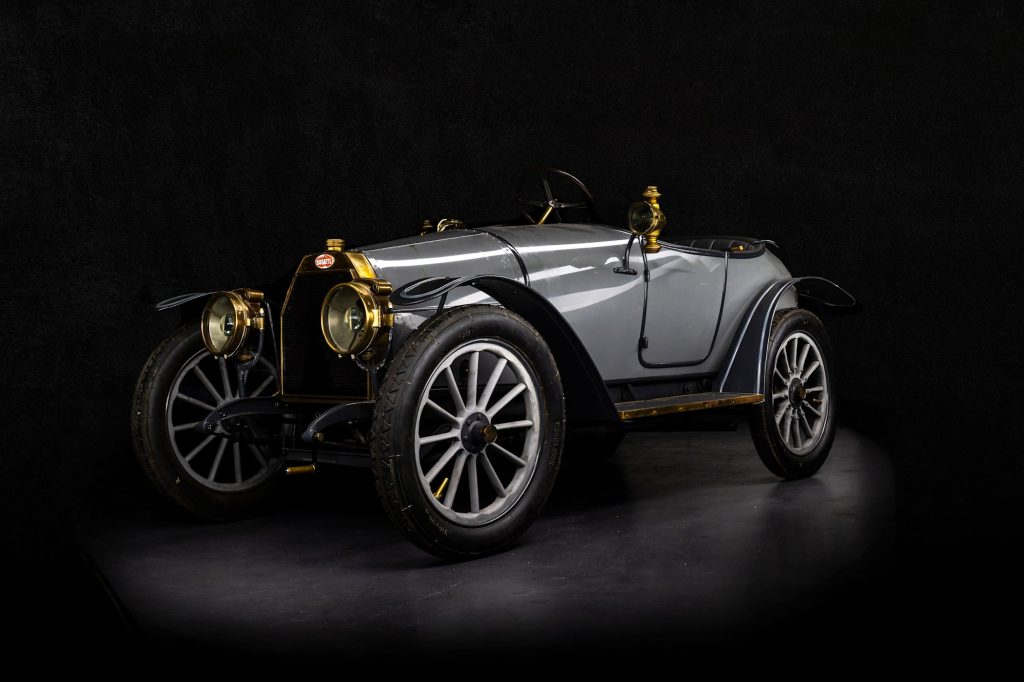
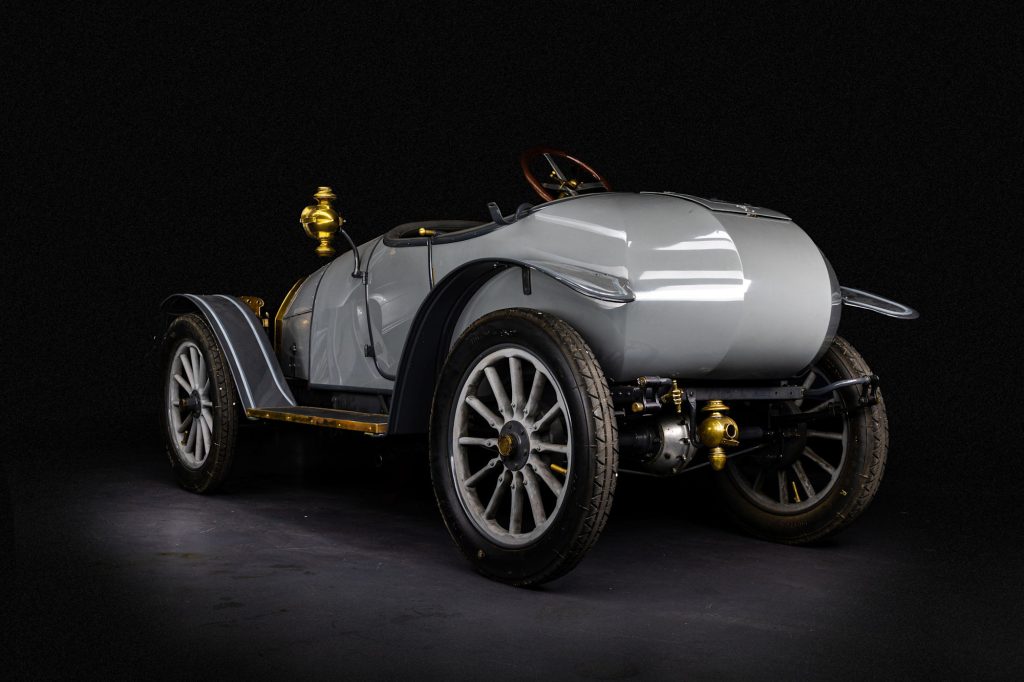
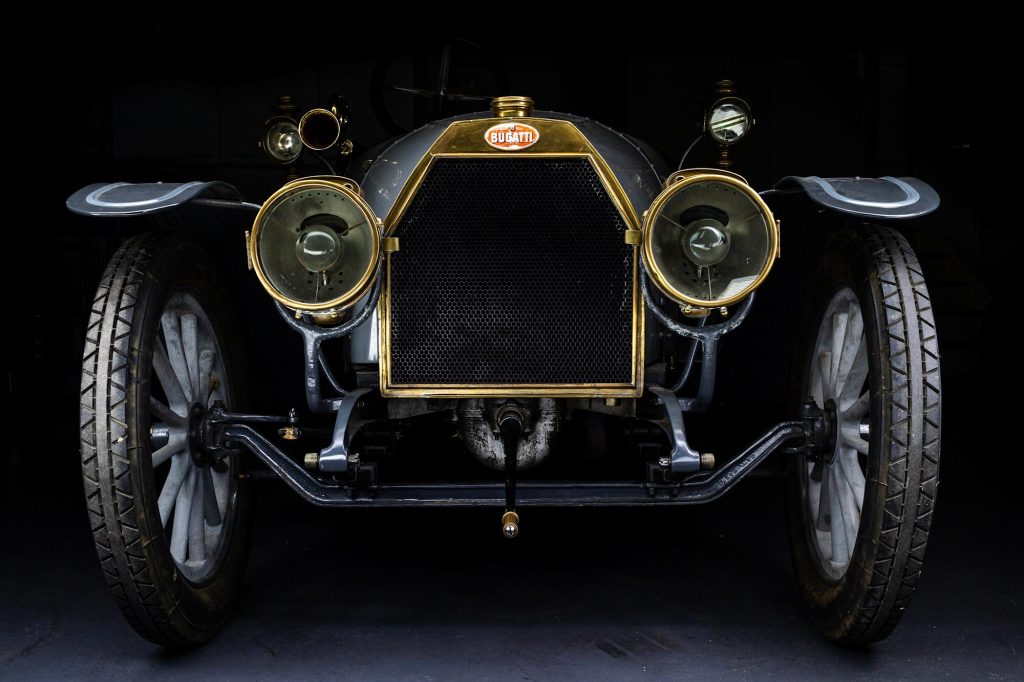
It is still unclear whether the very special bodywork that the car has kept to this day was made in France before its delivery or whether it was bodied when it arrived in Russia. This fact is cross-checked by A. Dupouy's book "L'Automobile en Russie jusqu'en 1917" in which the author cites a few cars that we know arrived in Russia at that time, "442" being part of it and illustrated as such. Another car is the 1917 Delaunay-Belleville that Tsar Nicholas II had ordered as a car for hunting.
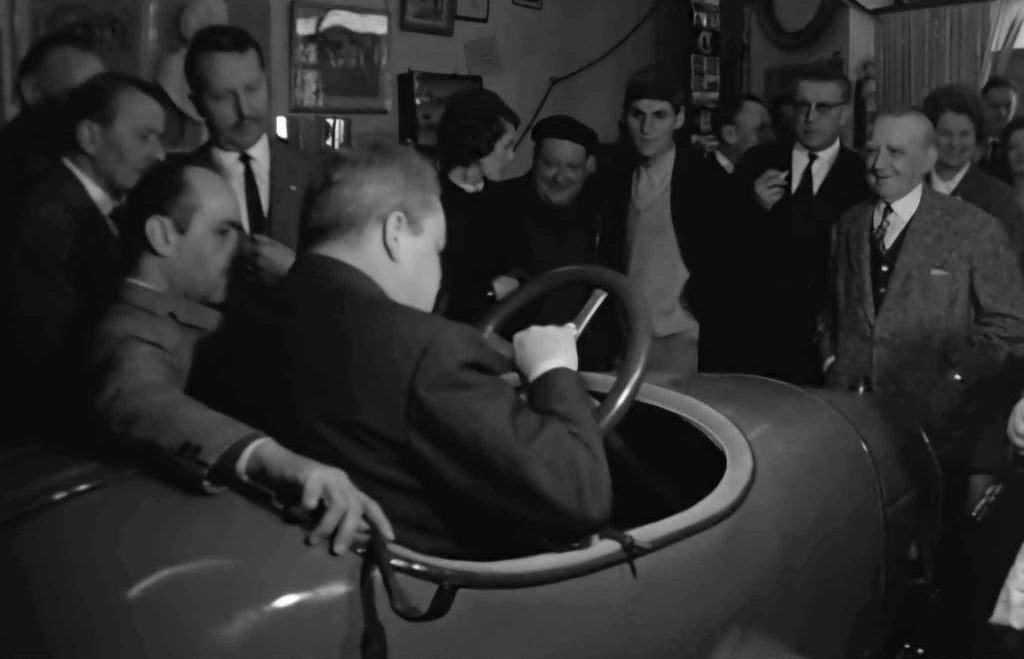
Who owned this Bugatti afterwards or how the car escaped the uncertainties of conflicts and time, no one can say, but in October 1964, Mr. Girod-Emery, owner of the "Museon di Rodo" in Uzès, who had gone to Moscow, learned of the existence of a very old Bugatti which was located 150 km south of the city, in Tula: it was "442". Fortunately, the owner was eager to sell, but wanted this car to be sold to a museum in such a way that it would be appreciated at the its fair value. Since there was no such organization in the USSR interested in French cars, Mr. Girod-Emery was able to convince the owner that bringing the car back to France to be shown in his museum would be an ideal place to exhibit it. Difficult negotiations followed, but a little less than a year later, the car began its journey back to France. Transported by rail to Odessa on 26 September 1965 and then by boat to Genoa and Marseille on 20 October, the little Bugatti arrived in Uzès.
At the time, a summary restoration was carried out and the repainted and reupholstered car was ready to enter the museum of Mr. Girod-Emery which was opened on April 3, 1966.
It remained there until his death in 1990, when it became the property of two collectors reputed to be fervent Bugattists, Hervé Charbonneaux and Jean-François du Montant. The previous owner bought it at the Bugatti meeting in Montlhéry in 1993.
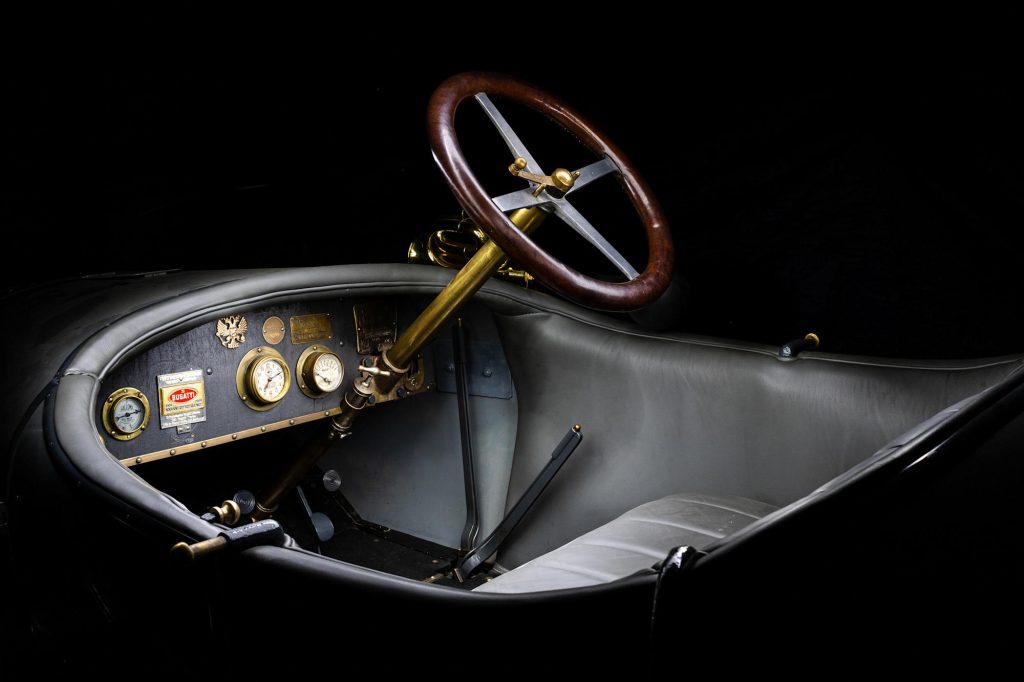
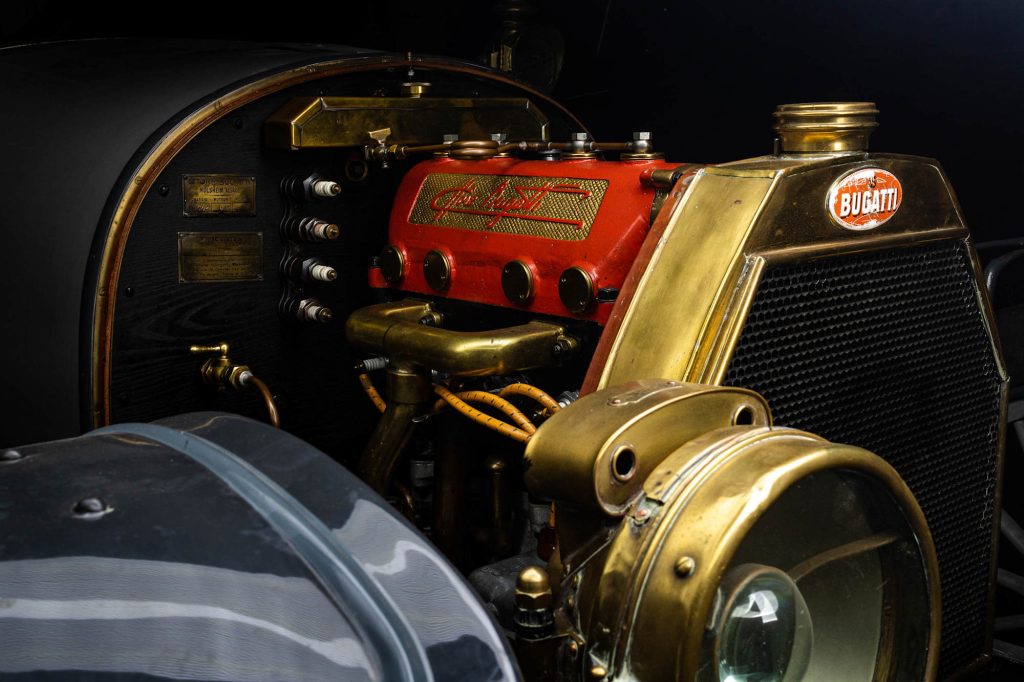
It passed into the hands of the current owner at an auction in Paris in December 2000. As soon as this was purchased, the owner, himself a Bugatti enthusiast, sought the help of David Sewell and his suggestions on how to proceed with the restoration of this car. It was soon realized that the restoration of the 1960s had been very limited and that mechanically and structurally, the car was very tired. The owner commissioned Paul Myatt and later Zakira's Garage in Cincinnati to carry out a thorough restoration: the car was completely dismantled and rebuilt. The invoices for this work as well as a large number of detail photos are on file.
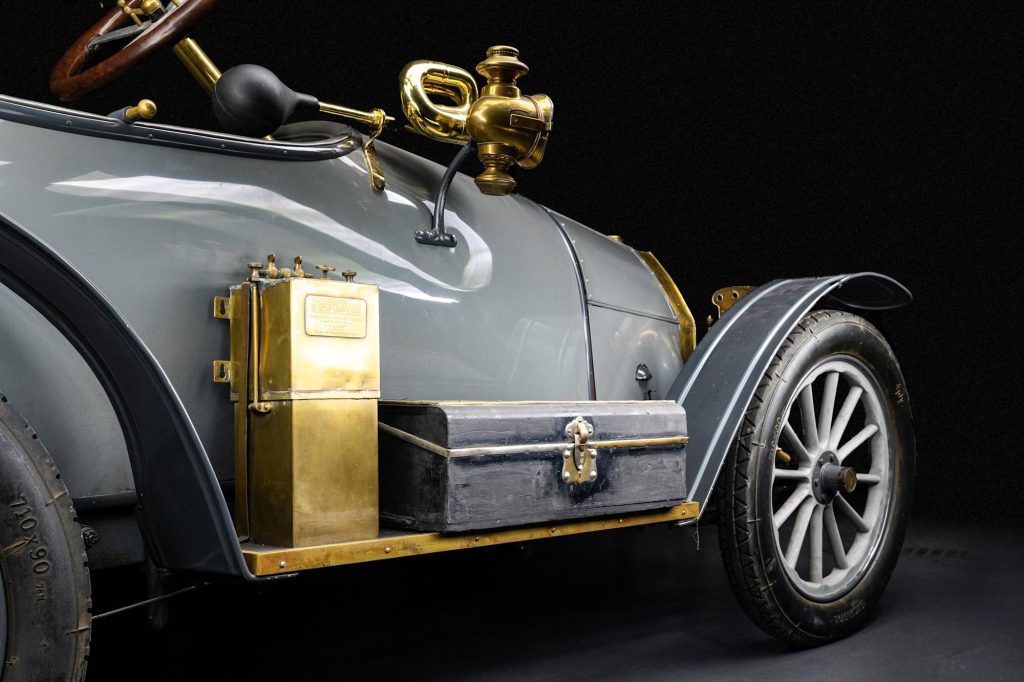
The result is astonishing and worthy of this jewel from Bugatti. Mechanically, everything has been redone and the engine starts on one or two turns of the crank. A short test drive showed how lively and fast this car, despite its age, is.
Back in France for the sale, it represents the archetype of this modest model from which generations of Bugattis will be born. Between its rarity, its mysterious links to Russia and its magnificent presentation, this is an eminently desirable automobile dating from the incubation period of the "thoroughbred" spirit. Offered with its registration document in New York, it will be subject to the applicable import taxes.
Introduced in 1910, Bugatti's first production car is retrospectively referred to as the Type 13, though contemporary literature confirms five variants of 8 valve four cylinder cars in the pre-war period. The distinguishing feature for 1912 cars was the wheel base length, the Type 13 being 2 metres, while two other models a 2.4 metre Type 15 and 2.55 meter Type 17 were also listed.
Of relatively lightweight proportions, even in these early days Bugatti favoured the use of the finest materials and combined with his exceptional design skills enabled these cars to provide performance out of character with their size. The cars received very favourable press response, not least by W.F. Bradley in The Motor in November 1910, where he comments 'as a runabout the Bugatti seems ideal, for on open roads, it is as fast as any of the larger mounts, and in traffic it is quicker because of its handiness.' 'The makers guarantee that the little Bugatti can maintain 60 miles an hour, the claim seems to be well-founded.'
The 8 valve cars were immediately campaigned in various events, the results of which were proclaimed proudly in sales catalogues, earliest successes being first places in the meeting at La Sarthe on June 4/5th 1911. Production of these Bugattis ran consecutively from chassis number 361 and from 1910 to the outbreak of war in 1914, by which time over 340 cars had been built. It continued after the war for a year from 1919, bringing total unit numbers to 475.
There are fewer than 25 surviving examples of the model, the oldest of all is chassis 365 which resides in the Science and Technical Museum in Prague. The next production car '366' may now be seen at the National Motor Museum, Beaulieu, U.K. having been negotiated by Brooks/Bonhams specialists in lieu of inheritance tax on the death of its owner Peter Hampton in 1991. Car 432 also survives making this the 4th oldest production car to survive, though it would have been the 82nd car built.
With assistance from noted marque authorities David Sewell and Norbert Steinhauser – author of the recently published book Ettore Bugatti, L'artisan de Molsheim - the result of tireless research on the earliest days of the Bugatti company, Bonhams are able to confirm that this car was delivered new on 13th March 1912, to Messrs. Batalin and Plotnikoff of St. Petersberg. It is also not known whether the distinctive bodywork that the car retains to this very day was put on the car in France before it was sold, or whether it was bodied on its arrival in the U.S.S.R. This is further endorsed by A. Dupouy's book L'Automobile en Russie jusqu'en 1917 where the author cites a handful of cars that were known to have arrived in Russia in the Edwardian period, 442 being one of those and it is illustrated as such. Another is the 1917 Delaunay-Belleville which Tsar Nicholas II ordered for use as a hunting car.
Who owned the Bugatti next or how the car came to weather the vagaries of conflicts and time has not been documented, but in October 1964, M. Girod-Emery, the owner of the 'Museon de Rodo' at Uzès in Provence while traveling in Moscow, learned of an early Bugatti which rested 150km south of the capital, in Tula, and that was 442. Fortunately, the owner was willing to sell, but wished for his prized possession to be sold to a Museum so that it could be appreciated properly. Since there was no such local institution with an interest in French cars, M. Girod-Emery was able to convince the owner that by returning it to France and being exhibited in his Museum, this would be a perfect location for the car. Protracted negotiations ensued, but just under a year later the car began its journey back to France. Transported by rail to Odessa on 26 September 1965 and subsequently shipped via Genoa to Marseilles by the 20th October, the little Bugatti arrived in Uzès.
At this time a basic restoration was commissioned, the car seemingly being efficiently repainted and retrimmed ready for exhibition at Mr. Girod-Emery's Museum when it opened on 3rd April 1966.
There it remained until M. Girod-Emery's death in 1990, at which time it passed to the joint ownership of two noted car enthusiasts and Bugattistes Hervé Charbonneau and Jean-François du Montant. It was during the annual Bugatti weekend at the historic Montlhèry race circuit in 1993 that the former owner purchased it.
It passed to the present owner at public auction in Paris in December 2000. On acquisition, the owner another die-hard Bugatti enthusiast enlisted the help of David Sewell to make suggestions as to how to proceed with a restoration of the car. It was quickly apparent that the mid 1960s restoration had been modest in its extent and that mechanically and structurally the car was extremely tired. The owner commissioned Paul Myatt and later Zakira's Garage of Cincinnati to undertake an extensive and extremely thorough restoration, the car being entirely disassembled and rebuilt from the ground up. Bills for this work as well as copious photographs documenting this work are on file.
Introduced in 1910, Bugatti's first production car was retrospectively designated the Type 13, although contemporary literature reports five variants of this four-cylinder, eight-valve type that appeared before the Great War. The defining feature of the 1912 types was the wheelbase, two metres for the Type 13, 2.4 m for the Type 15 and 2.55 m for the Type 17.
For these light and small models, especially at that time, Bugatti favoured the best materials, which, combined with his exceptional design talent, gave these cars performance that was unrelated to their small size. The press was enthusiastic, especially W. F. Bradley in The Motor of November 1910 where he wrote: "As a runabout, the Bugatti looks ideal, on the road it is as fast as any large car and in traffic it is faster thanks to its handling. The manufacturer guarantees that the little Bugatti can last 100 km/h and this assertion seems to be completely justified."
The "8-valve" cars were immediately entered in various events, the results of which were proudly announced in the catalogues. Production of these Bugattis began at chassis No. 361 and continued from 1910 until the declaration of war in 1914, by which time more than 340 cars had been built. It resumed after 1919 for a year, bringing total production to 475 units.
Fewer than 25 survivors of this model remain, the oldest being chassis 365 on display at the Museum of Science and Technology in Prague. The next chassis (366) is in the National Motor Museum in Beaulieu, UK, having been negotiated by Brooks/Bonhams specialists in settlement of the inheritance tax of the late Peter Hampton, its owner, in 1991. The surviving No. 432 car is therefore the fourth oldest surviving production car that would have been the 82nd built.
With the help of authorized brand specialists David Sewell and Norbert Steinhauser – author of the recent book Ettore Bugatti, the Molsheim craftsman – the result of the research carried out on the beginnings of the Bugatti company allows Bonhams to confirm that this car was delivered new on March 13, 1912 to Messrs. Batalin and Plotnikoff of St Petersburg.
It is still unclear whether the very special bodywork that the car has kept to this day was made in France before its delivery or whether it was bodied when it arrived in Russia. This fact is cross-checked by A. Dupouy's book "L'Automobile en Russie jusqu'en 1917" in which the author cites a few cars that we know arrived in Russia at that time, "442" being part of it and illustrated as such. Another car is the 1917 Delaunay-Belleville that Tsar Nicholas II had ordered as a car for hunting.
Who owned this Bugatti afterwards or how the car escaped the uncertainties of conflicts and time, no one can say, but in October 1964, Mr. Girod-Emery, owner of the "Museon di Rodo" in Uzès, who had gone to Moscow, learned of the existence of a very old Bugatti which was located 150 km south of the city, in Tula: it was "442". Fortunately, the owner was eager to sell, but wanted this car to be sold to a museum in such a way that it would be appreciated at the its fair value. Since there was no such organization in the USSR interested in French cars, Mr. Girod-Emery was able to convince the owner that bringing the car back to France to be shown in his museum would be an ideal place to exhibit it. Difficult negotiations followed, but a little less than a year later, the car began its journey back to France. Transported by rail to Odessa on 26 September 1965 and then by boat to Genoa and Marseille on 20 October, the little Bugatti arrived in Uzès.
At the time, a summary restoration was carried out and the repainted and reupholstered car was ready to enter the museum of Mr. Girod-Emery which was opened on April 3, 1966. It remained there until his death in 1990, when it became the property of two collectors reputed to be fervent Bugattists, Hervé Charbonneaux and Jean-François du Montant. The previous owner bought it at the Bugatti meeting in Montlhéry in 1993.
It passed into the hands of the current owner at an auction in Paris in December 2000. As soon as this was purchased, the owner, himself a Bugatti enthusiast, sought the help of David Sewell and his suggestions on how to proceed with the restoration of this car. It was soon realized that the restoration of the 1960s had been very limited and that mechanically and structurally, the car was very tired. The owner commissioned Paul Myatt and later Zakira's Garage in Cincinnati to carry out a thorough restoration: the car was completely dismantled and rebuilt. The invoices for this work as well as a large number of detail photos are on file.
The result is astonishing and worthy of this jewel from Bugatti. Mechanically, everything has been redone and the engine starts on one or two turns of the crank. A short test drive showed how lively and fast this car, despite its age, is.
Back in France for the sale, it represents the archetype of this modest model from which generations of Bugattis will be born. Between its rarity, its mysterious links to Russia and its magnificent presentation, this is an eminently desirable automobile dating from the incubation period of the "thoroughbred" spirit. Offered with its registration document in New York, it will be subject to the applicable import taxes.
Introduced in 1910, Bugatti's first production car is retrospectively referred to as the Type 13, though contemporary literature confirms five variants of 8 valve four cylinder cars in the pre-war period. The distinguishing feature for 1912 cars was the wheel base length, the Type 13 being 2 metres, while two other models a 2.4 metre Type 15 and 2.55 meter Type 17 were also listed.
Of relatively lightweight proportions, even in these early days Bugatti favoured the use of the finest materials and combined with his exceptional design skills enabled these cars to provide performance out of character with their size. The cars received very favourable press response, not least by W.F. Bradley in The Motor in November 1910, where he comments 'as a runabout the Bugatti seems ideal, for on open roads, it is as fast as any of the larger mounts, and in traffic it is quicker because of its handiness.' 'The makers guarantee that the little Bugatti can maintain 60 miles an hour, the claim seems to be well-founded.'
The 8 valve cars were immediately campaigned in various events, the results of which were proclaimed proudly in sales catalogues, earliest successes being first places in the meeting at La Sarthe on June 4/5th 1911. Production of these Bugattis ran consecutively from chassis number 361 and from 1910 to the outbreak of war in 1914, by which time over 340 cars had been built. It continued after the war for a year from 1919, bringing total unit numbers to 475.
There are fewer than 25 surviving examples of the model, the oldest of all is chassis 365 which resides in the Science and Technical Museum in Prague. The next production car '366' may now be seen at the National Motor Museum, Beaulieu, U.K. having been negotiated by Brooks/Bonhams specialists in lieu of inheritance tax on the death of its owner Peter Hampton in 1991. Car 432 also survives making this the 4th oldest production car to survive, though it would have been the 82nd car built.
With assistance from noted marque authorities David Sewell and Norbert Steinhauser – author of the recently published book Ettore Bugatti, L'artisan de Molsheim - the result of tireless research on the earliest days of the Bugatti company, Bonhams are able to confirm that this car was delivered new on 13th March 1912, to Messrs. Batalin and Plotnikoff of St. Petersberg. It is also not known whether the distinctive bodywork that the car retains to this very day was put on the car in France before it was sold, or whether it was bodied on its arrival in the U.S.S.R. This is further endorsed by A. Dupouy's book L'Automobile en Russie jusqu'en 1917 where the author cites a handful of cars that were known to have arrived in Russia in the Edwardian period, 442 being one of those and it is illustrated as such. Another is the 1917 Delaunay-Belleville which Tsar Nicholas II ordered for use as a hunting car.
Who owned the Bugatti next or how the car came to weather the vagaries of conflicts and time has not been documented, but in October 1964, M. Girod-Emery, the owner of the 'Museon de Rodo' at Uzès in Provence while traveling in Moscow, learned of an early Bugatti which rested 150km south of the capital, in Tula, and that was 442. Fortunately, the owner was willing to sell, but wished for his prized possession to be sold to a Museum so that it could be appreciated properly. Since there was no such local institution with an interest in French cars, M. Girod-Emery was able to convince the owner that by returning it to France and being exhibited in his Museum, this would be a perfect location for the car. Protracted negotiations ensued, but just under a year later the car began its journey back to France. Transported by rail to Odessa on 26 September 1965 and subsequently shipped via Genoa to Marseilles by the 20th October, the little Bugatti arrived in Uzès.
At this time a basic restoration was commissioned, the car seemingly being efficiently repainted and retrimmed ready for exhibition at Mr. Girod-Emery's Museum when it opened on 3rd April 1966.
There it remained until M. Girod-Emery's death in 1990, at which time it passed to the joint ownership of two noted car enthusiasts and Bugattistes Hervé Charbonneau and Jean-François du Montant. It was during the annual Bugatti weekend at the historic Montlhèry race circuit in 1993 that the former owner purchased it.
It passed to the present owner at public auction in Paris in December 2000. On acquisition, the owner another die-hard Bugatti enthusiast enlisted the help of David Sewell to make suggestions as to how to proceed with a restoration of the car. It was quickly apparent that the mid 1960s restoration had been modest in its extent and that mechanically and structurally the car was extremely tired. The owner commissioned Paul Myatt and later Zakira's Garage of Cincinnati to undertake an extensive and extremely thorough restoration, the car being entirely disassembled and rebuilt from the ground up. Bills for this work as well as copious photographs documenting this work are on file.
We are still verifying the biography for this chassis. It will appear here as soon as its record is confirmed.
Known Owners (7)
6 more owner(s) in the full record. Sign in to see more owners
Events (5)
1 more event(s) in the full record. Sign in to see more events
Service Records & Coachwork
Maintenance and service records are available to registered members.
Sign in to viewBibliography (3)
-
Perridon Collection dossier 'Bugatti Type 13' (chassis 442)
Document — The Perridon Collection -
Bonhams research on early Bugatti production (chassis 442)
Registry — David Sewell & Norbert Steinhauser -
Ettore Bugatti, the craftsman from Molsheim
Book — Norbert Steinhauser
Photo Archive (19)
![Perridon Collection dossier 'Bugatti Type 13', p.5 [t13-442-p05-x132.jpg]](https://bugattiinsights.com/wp-content/uploads/2026/08/bdc90e3e-e0f5-41e8-93f7-1579c21c063b-1024x463.jpg)
![Perridon Collection dossier 'Bugatti Type 13', p.5 [t13-442-p05-x84.jpg]](https://bugattiinsights.com/wp-content/uploads/2026/08/45d9a6b1-d299-4a59-ab9f-048cd5a7ef14-1024x682.jpg)
![Perridon Collection dossier 'Bugatti Type 13', p.6 [t13-442-p06-x85.jpg]](https://bugattiinsights.com/wp-content/uploads/2026/08/cd3de50f-f782-46cb-b90c-39d2e586d252-1024x682.jpg)
![Perridon Collection dossier 'Bugatti Type 13', p.7 [t13-442-p07-x90.jpg]](https://bugattiinsights.com/wp-content/uploads/2026/08/8e3fd2a2-f3ee-45fb-9e07-2832e302948f-1024x629.jpg)
![Perridon Collection dossier 'Bugatti Type 13', p.8 [t13-442-p08-x93.jpg]](https://bugattiinsights.com/wp-content/uploads/2026/08/38764665-32bd-4dfc-8a81-d7280881bb83.jpg)
![Perridon Collection dossier 'Bugatti Type 13', p.9 [t13-442-p09-x96.jpg]](https://bugattiinsights.com/wp-content/uploads/2026/08/77cd6c2e-520f-420b-8d67-f9f8b2f6b708.jpg)
![Perridon Collection dossier 'Bugatti Type 13', p.9 [t13-442-p09-x97.jpg]](https://bugattiinsights.com/wp-content/uploads/2026/08/fe6594d5-8c0d-4938-b4c9-4892a12d06c8.jpg)
![Perridon Collection dossier 'Bugatti Type 13', p.10 [t13-442-p10-x100.jpg]](https://bugattiinsights.com/wp-content/uploads/2026/08/277f4cdc-db49-46bc-b3e9-abdccfda5021.jpg)
![Perridon Collection dossier 'Bugatti Type 13', p.11 [t13-442-p11-x32.jpg]](https://bugattiinsights.com/wp-content/uploads/2026/08/10306ca9-f1f0-4923-98c7-23ac84eafd90-760x1024.jpg)
![Perridon Collection dossier 'Bugatti Type 13', p.12 [t13-442-p12-x35.jpg]](https://bugattiinsights.com/wp-content/uploads/2026/08/52008001-bf37-41ca-9805-85516a683e2c-1024x683.jpg)
Download Dossier
One-time download. Full research file for this chassis.
- Complete ownership history with provenance
- All recorded events & competition results
- Technical specifications & engine data
- Full bibliography & source references
- 19 archival photographs
- BCC registration status & notes
Your dossier is ready.
Your download will start automatically. Check your email for a receipt and download link.
Download again